
I grew up in what history would reveal as the hotbed of clerical sexual abuse in the Archdiocese of Denver. What’s now known as the Highlands, in my youth, was just simply the North Side. There were six parishes and one orphanage with schools in my extended neighborhood. The Colorado Attorney General Report in 2019 identified eleven priests in these six schools who sexually abused young boys while acting as their shepherds.
The abuse all-star of this group, Fr. Harold Robert White, was an assistant at my parish during my early years in attendance. White claimed sixty child victims during his thirty-two year career. The Denver bishops played an adept shell game with White having him serve in nineteen different parishes during his tenure.
Another parish in North Denver featured Fr. Lawrence St. Peter whose charisma and efficient administrative skills were being positioned for his advancement to the bishop ranks. His thirty-four years in the archdiocese saw him as a pastor and vicar of priests before he was named as the archdiocesan administrator when Archbishop James V. Casey died. As the interim administrator before James Stafford was named Casey’s replacement, St. Peter sanitized his personnel file. The Colorado attorney general had to reconstruct the file through triangulation based upon other abusive priests’ records and reports from psychological treatment programs in which St. Peter was sent for counseling.
One of St. Peter’s victims was the son of a parishioner with whom the priest had developed a close friendship. Regularly the pastor would remove the youth from class under pretense that the lad was helping him with some tasks in the rectory or in the sacristy. Once alone in those places, St. Peter would rape the boy and then return him to class.
My experience many years later in the same parish had me confront Fr. James Moreno for similar behavior. A father of one of Moreno’s altar boys told me that he and his wife caught Moreno abusing their son. My efforts to remove Moreno initially failed as the archdiocese refused to take action. Moreno admitted in the 2019 investigation to have raped another young boy sixty times over a three year period while he was a spiritual counselor at a local high school seminary.
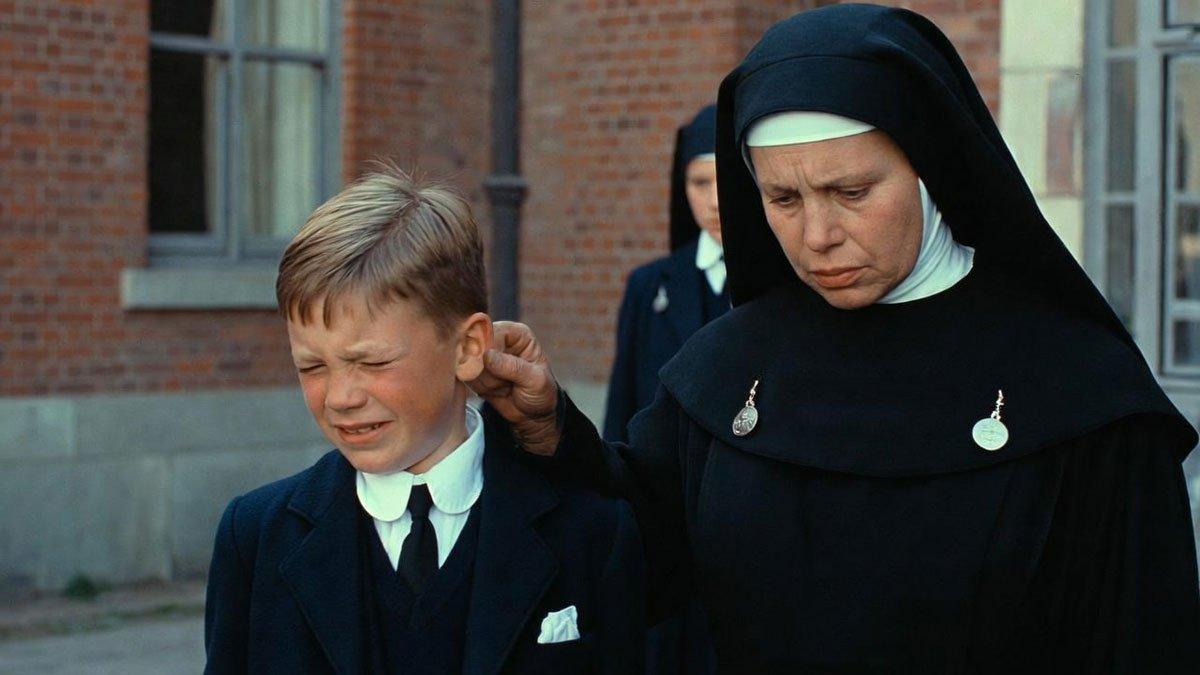
From an early age I was branded as “incorrigible” by some of my teachers. I wasn’t a hoodlum but the Sisters of St. Joseph who educated me had their hands full. I admit what punishment I had received was only a small percentage of what I actually deserved.
Since my experience confronting the archdiocese about Moreno, I have noted a number of commonalities centered on the problem of priestly sexual abuse. First, most clerical predation is performed on boys, either children or early teens. Second, most pedophile and ephebophile priests are homosexual. And third, most abuse performed by priests is targeted and planned, usually through a grooming process. Like hungry lions on the Serengeti, predator priests prefer to prey on the slow, the docile, the outcast, or the one somehow impaired.
I remember as a second or third grader in my parish school participating in some sort of stupid hijinx with fellow classmates close to the rectory. Being collectively witless, we allowed ourselves to be observed from a rectory window. After observing what we were doing, Fr. White was on us like white on rice. He grabbed me and another classmate by the collar. I can’t remember what my classmate did, but I do recall wiggling out of White’s grasp and running away. When I returned to school the following day, our principal, Sister Agatha Irene, grabbed me by the collar and dragged me into her office. I was threatened with expulsion, had to stay after school, and made to weed the convent garden. The only thing I remember from her lecture was, “Young man, you are incorrigible!” As a six or seven-year old kid I didn’t know what the word “incorrigible” meant. Because it sounded like “courage,” a word I did know, I somehow thought it might be some sort of a back-handed compliment. Now, some decades later, I do think there is some correlation between courage and incorrigibility. (The attorney general’s 2019 report also referred to Sister Agatha Irene. When one of White’s victim’s parents came forward with their accusation, the boy’s family met with her. She castigated the family telling them that their son was a liar and that he needed to go to confession.)
Upon reflecting on my mischievous years, it seems to me that the last child that Fr. White would have chosen to abuse would have been someone like me.
I have also noticed, since publishing four books on priestly sexual abuse, that the Church relies upon faithful Catholics who are compliant and demure. I have had fellow parishioners, family, and friends accuse me of “beating a dead horse.” (This is hardly true, as the sex abuse is still being covered up. From the Catholic Church’s continuing behavior it could be said that the Vatican’s opaqueness is its “one trick pony.”) Those same people have told me that however intriguing my books may be, they won’t read them because doing so may cause them to lose faith in the Church.
In a way, most people who subscribe and read postings on Complicit Clergy and who agree with its general sentiment could also be described as “incorrigible.” The fact that an abuser would generally avoid a child or teen that he could not control speaks well for an incorrigible mind-set that we critics should exemplify.
The current pastor at my parish has mentioned to someone that he avoids contact with me because I have “written books against the Church.” While his estimation is far from the truth, it does prove that he has never read what I have written. His avoidance is telling. It is a microcosm that illustrates that the Church still has not learned how to deal with its sordid priestly abuse problem. This same pastor has preached often on Mt. 25: 1-30 and Lk. 10: 1-10. They are good topics for preaching as they extol the virtues of non-complacency. Clearly a fan of Zacchaeus, the pastor lauds the small man’s zeal to go “over and above” his peers to be close to Our Lord. But not once did the priest correlate that complacency has compounded the problem of sexual abuse within the Church itself. And by his purposeful alienation, it appears he actually values complacency and distains the “non-complacent” in my case. Like Fr. White preferring a more docile child, it appears many in the Church like my pastor prefer “complacency” on internal Church matters and “non-complacency” with the rest of the world. The Church that continues to use the shell game to protect predatory priests and bishops now treats critics like us as non-believers or apostates. Like the shell game itself, they exclude, hide, eliminate, or ignore. They make the likes of Soapy Smith envious of their adept dexterity. They hope that along with them faithful Catholics will follow their lead and not pay attention to us. Like Fr. White decades ago, the last thing a bishop or any defender of the status quo would do is engage with the “incorrigible.”
I am confident that many of the contributors to Complicit Clergy have experienced the alienation and ostracizing attitude of those who are compliant. I encourage my fellow critics to stay the course in efforts to better our Church and help it to fulfill Jesus’ desire to protect the widow and the orphan – the powerless. We Catholic Church critics need to embrace our incorrigibility and, in fact, expand our reach. The entrenched bishops and their allies like labeling us as “incorrigible” in a negative light. But, in truth, opposing them by revealing their noxious behavior places our “incorrigible” attitudes as a positive beacon. I urge you to keep up the good work.
David Tracy is a Catholic Church critic who has written four books addressing the problem of clerical abuse. His latest book, Prohibition and the Priest is available at Amazon and Barnes and Noble.