
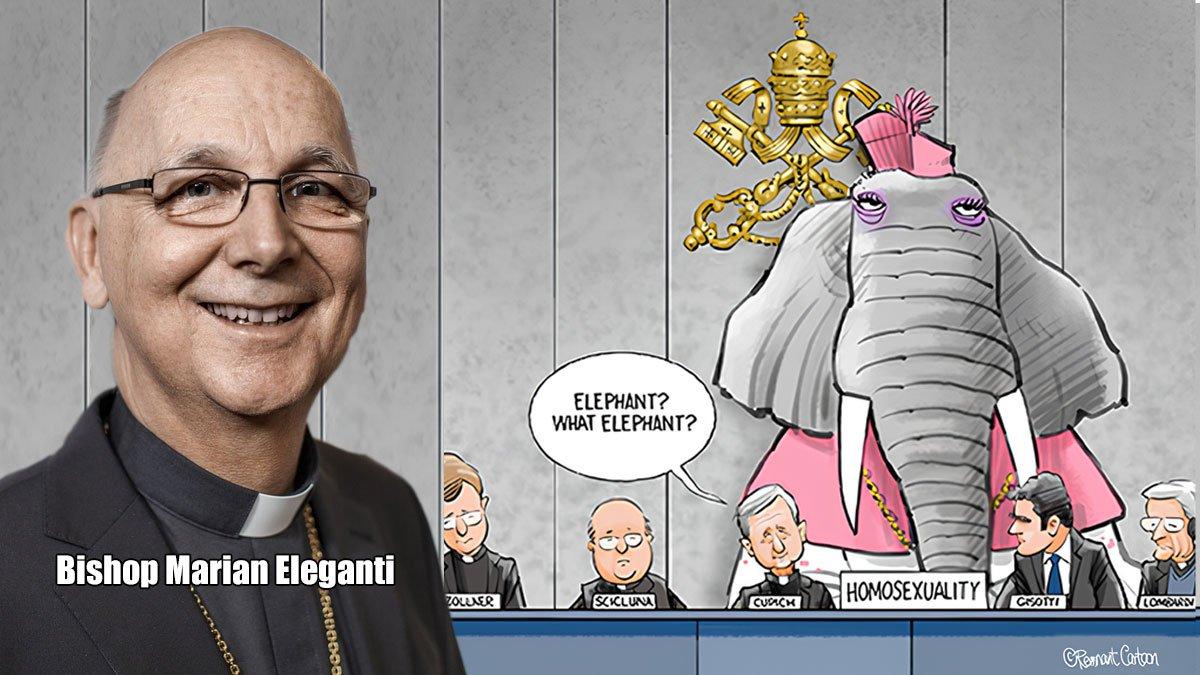
In my opinion, homosexuality is of particular importance in the transformation of society and its traditional ideas about marriage, family, and gender. These new social standards aren’t simply falling from the sky; they have been in the works for decades. Homosexual thinkers and pioneers play a significant role in this.
Sexuality plays a role in the thinking of the Frankfurt School [1] and their heirs, the so-called postmodern deconstructivists [2] not a subordinate role. Therefore, not only the philosophy of its thinker must be examined, but also the “Sitz im Leben” (the biographical connection between sexuality and thought) of their philosophy. This is very illuminating. Although no major representative of the Frankfurt School was homosexual, its so-called Critical Theory has influenced the actual deconstructionists and the theorists of gender and queer theory. [3] prepared the ground (they are all critical and even hostile towards “dogmatic” precepts). Among the latter, there are well-known homosexuals. Foucault, Derrida, and Butler cannot be understood without the critical theory of the Frankfurt School. They shared its mistrust of “objective reason.” Foucauld is influenced by Marcuse. Derrida radicalizes Foucauld. His philosophy, in turn, is of great importance for the development of queer theory. Butler (non-binary, queer) connects Foucauld and Derrida. Foucauld and Barthe are homosexual. Butler lives in a same-sex partnership. Eve Kosofsky Sedgwick (bisexual) is a pioneer of queer theory. Paul B. Preciado (originally Beatriz Preciado) is a trans man (queer). He even goes beyond queer theory (post-queer; techno-queer). These connections must be recognized.
The European project [4] The “Union of Equality” (Strategy 2026-2030) is attempting to implement gender ideology in the European Union. This primarily involves redefining marriage, family, and sexuality. So-called gender and sexual orientation equality is to be implemented in the member states through significant efforts (funding of relevant NGOs, educational programs, campaigns, etc.). This includes inclusive education programs starting from childhood; references to natural differences between men and women are to be ignored; gender reassignment and related legal adjustments are to be promoted; and natural parenthood and family are to be broken down in the spirit of sexual diversity.
Unfortunately, the Church has also been infected by this virus. Supposedly, it’s about the “rights” and “inclusion” of so-called “minorities.” These are left-wing, Marxist parameters that have penetrated deeply into ecclesiastical thought, but are alien to its essence. Nor do they apply to the Church. They are false. Above all, the Church excludes sin and error, sinners and heretics only if they demonstrate unrepentant and unrepentant behavior. This has nothing to do with discrimination. Exclusive access conditions to ecclesiastical offices (priesthood) arise from a correct understanding of the sacrament and do not fall under the category of legal inequality. The Church regulates all these things justly, even if many, for a variety of reasons, do not see or accept this. The moral law applies to all members of the Church without distinction.
The Church’s teaching on homosexuality is unchanged and needs no reiteration here. It is based on Scripture and Tradition, that is, on the revelation given in Jesus Christ.
Continue reading at The Remnant