
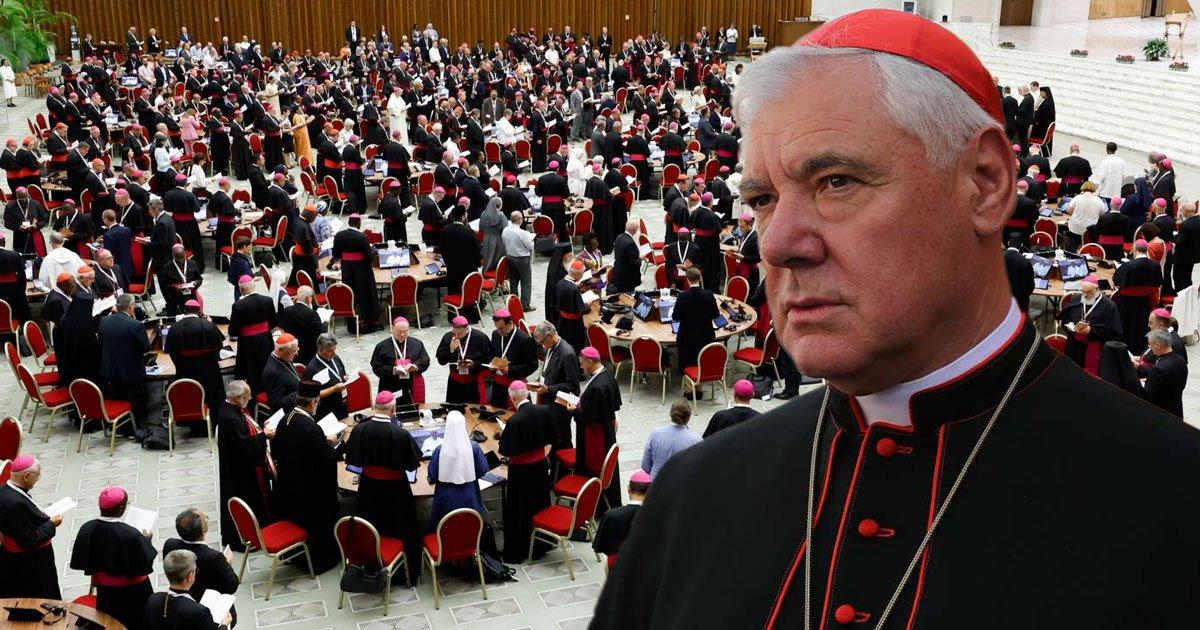
Let anyone who has an ear listen to what the Spirit is saying to the churches” (Rev. 2:11). This passage from Scripture is frequently quoted to justify a so-called “synodal Church,” a concept that at least partially, if not completely, contradicts the Catholic understanding of the Church. Factions with ulterior motives have hijacked the traditional principle of synodality, meaning the collaboration between bishops (collegiality) and between all believers and shepherds of the Church (based on the common priesthood of all those baptized into the faith), to further their progressive agenda. By executing a 180-degree turn, the doctrine, liturgy, and morality of the Catholic Church is to be made compatible with a neo-gnostic woke ideology.
Their tactics are remarkably similar to those of the ancient Gnostics, of whom Irenaeus of Lyon, who was elevated to Doctor of the Church by Pope Francis, wrote: “By means of their craftily-constructed plausibilities [they] draw away the minds of the inexperienced and take them captive. . . . These men falsify the oracles of God, and prove themselves evil interpreters of the good word of revelation. By means of specious and plausible words, they cunningly allure the simple-minded to inquire [into a more contemporary understanding]” until they are unable “to distinguish falsehood from truth” (Against Heresies, Book I, Preface). Direct divine revelation is weaponized to make the self-relativization of the Church of Christ acceptable (“all religions are paths to God”). The direct communication between the Holy Spirit and Synod participants is invoked to justify arbitrary doctrinal concessions (“marriage for all”; lay officials at the helm of ecclesiastical “power”; the ordination of female deacons as a trophy in the fight for women’s rights) as the result of a higher insight, which can overcome any objections from established Catholic doctrine.
But anyone who, by appealing to personal and collective inspiration from the Holy Spirit, seeks to reconcile the teaching of the Church with an ideology hostile to revelation and with the tyranny of relativism is guilty in various ways of a “sin against the Holy Spirit” (Matt. 12:31; Mark 3:29; Luke 12:10). This is, as will be explained below in seven different aspects, nothing other than a “resistance to the known truth” when “a man resists the truth which he has acknowledged, in order to sin more freely” (Thomas Aquinas, Summa Theologiae II-II, q. 14, a. 2).
Continue reading at First Things